
The 7-Heart Marks of a Spiritually Healthy Frontline Worker
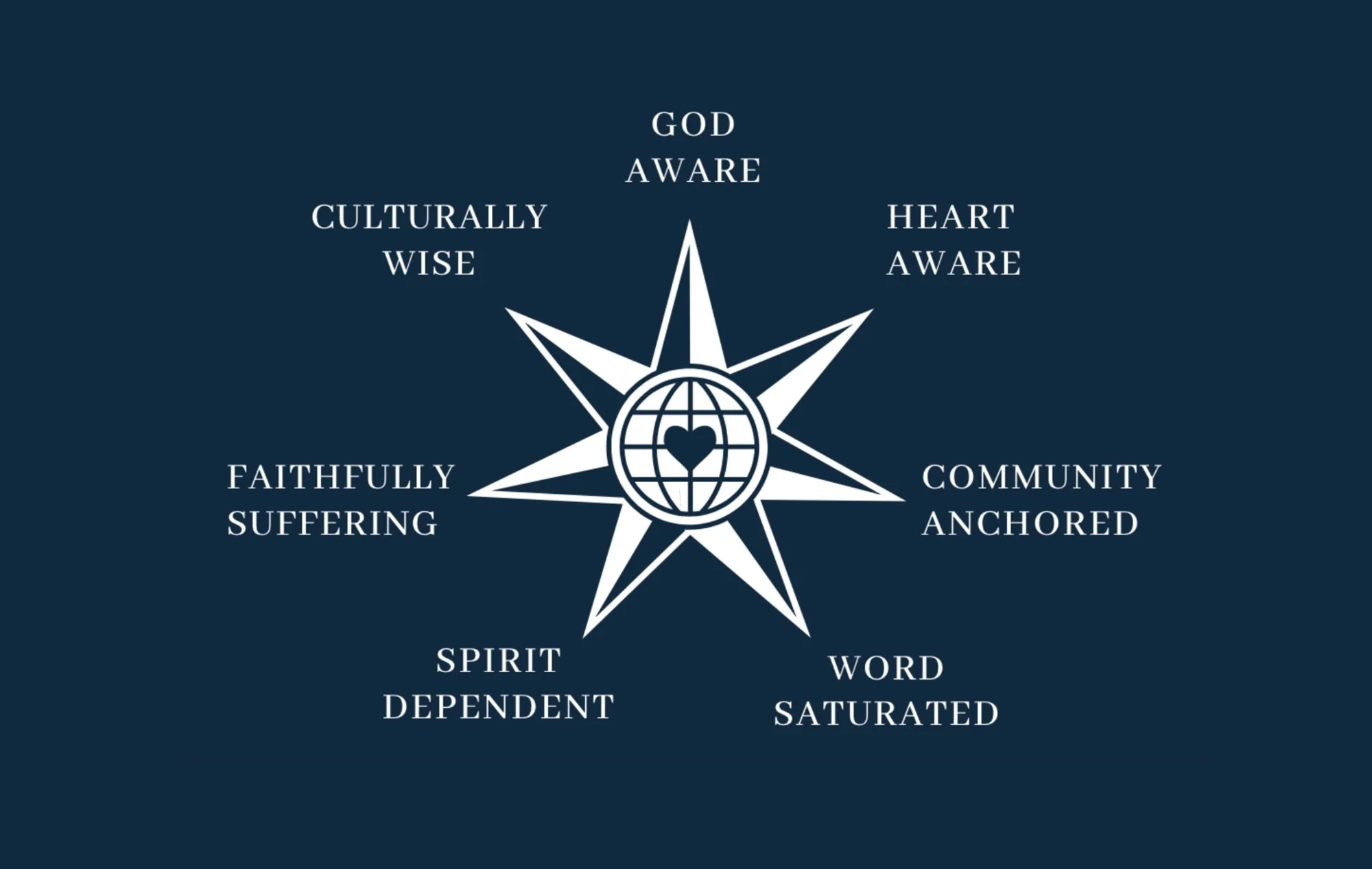
Through prayer and a years-long deep dive into Scripture came the 7-Heart Marks of a Spiritually Healthy Frontline Worker. This framework is the DNA of every resource, training, and counseling session we provide, and is the soil from which the Frontlines Platform was developed.
The Nine-Letter Word We All Need - Endurance
What is one word that can be found in the spiritual bios of every cherished saint who has gone before us?
Endurance.
Endurance. We need it (Heb. 12:2). We long for it (Ps. 27:14). We know we’ll never finish the race without it, no matter the distance (2 Tim. 4:7). Those of us regularly serving on the frontlines of gospel ministry increasingly feel the challenges of it in our lives and those we labor to love (2 Cor. 6:4-10).
But, there’s a problem. More than one variety of endurance exists.
One to long for, and one to avoid.
So how do we have and identify the right kind of endurance?
There's an endurance that humbles, and an endurance that hardens. An endurance marked by growth in love, joy, peace, patience, kindness, goodness, faithfulness, gentleness, and self-control (not to mention courage and humility). And there's an 'endurance’ marked by cynicism, condescension, and pride, leaving division, isolation, and discouragement of others in its wake.
At Frontlines, we’ve been blessed to work with missionaries and gospel workers serving in difficult, sometimes extreme, contexts around the world. As we listen to their stories, there are at least seven key areas that Scripture highlights again and again that help produce godly, humble endurance.
This list isn't exhaustive. Many more can be listed alongside these seven. But we hope by providing a brief description of these 7-Heart Marks, you can have a healthy framework to understand and a healthy process to grow in godly endurance. Growth that is helped by others, guided by Scripture, and empowered by the Spirit. Whether as a periodic ‘heart-health’ assessment or as a regular meditation on your journey, we pray the Lord may use these to help strengthen your feet for the journey of gospel ministry ahead.
1. God Aware
Who is God? This is the most important question any of us can ask. One of our deepest spiritual needs is to be reminded daily of who our Father in heaven actually is. The ways of the world, our flesh, and the spiritual forces of darkness are always at work, subtly muddying the waters of how we see God and who we know Him to be.
God Awareness considers the question ‘who is God?’ in at least two ways. First, it asks: Who has He revealed Himself to be in Scripture? The Bible is where we find the clearest and most reliable revelation of our Father—His character, His promises, and His presence—most fully seen in The Son, and most powerfully and regularly brought to bear on our souls through The Spirit. These truths are the anchors that are most needed in every storm and season of life.
But we must be careful not to stop there. Second, God Awareness calls for honest, experiential reflection. Who do I instinctively, impulsively say God is? In this moment? In this season? What or who comes to mind when I hear the name God? Similarly, how do my daily responses to life reveal my belief or lack of belief in (or remembrance, or lack of remembrance of) God in that moment or season of life?
Our answers help expose the gaps between how I think about Him experientially and who He has actually revealed Himself to be.
Any gaps that exist will significantly impact our godly endurance in life and ministry, let alone our communion with the Lord. Satan knows this. Our flesh knows this. God Awareness helps us close the gap and strengthen our souls to behold Jesus rightly and produce the godly endurance in our lives that we long for.
2. Heart Aware
When life hits, and we respond, why did we respond the way that we did? And what is our heart responding to?
Why did that person or that situation provoke that reaction from our soul?
Heart Awareness helps us thoughtfully ask and begin to answer these questions. But how do we do this well? It begins with cultivating a healthy rhythm of slowing down the film of our lives. This helps us better consider three key areas of our surface-level responses to daily life: our thoughts, emotions, and choices. Scripture ascribes all three (not just our emotions!) to the heart.
Examining these above-the-surface responses helps us better discern what’s happening below the surface of our hearts, where true change takes place. There we find the deeper issues Scripture also locates in the heart—our beliefs, values, and commitments.
This is why a robust theology of the heart is essential for cultivating godly endurance. If we want to truly know ourselves and wisely care for others, we have to know the heart.
Also important for Heart Awareness is understanding the influences that shape our responses, both past and present. These influences do not determine our responses, but they do meaningfully impact them. Knowing these influences, whether physical strengths and weaknesses, social and relational contexts, and spiritual warfare, to name a few, helps us grow in wisdom, understanding, and compassion towards ourselves and those we serve. Over time, this growth in Heart Awareness helps produce resilient, godly endurance.
3. Community Anchored
God has designed all His people to be embedded in a local assembly of believers. So, what does that look like for someone on the front lines of ministry, especially for a pioneering missionary living overseas, to think well about their need to be one-anothered by other believers, and to one-another other believers in return? We are all sheep before we’re shepherds or ministry leaders. For those serving in local churches, thoughtful, intentional vulnerability with members of their local church allows them to be one-anothered well and is crucial for faithful endurance on the field.
In a missions context, it’s important for sending churches to think well about a healthy ecosystem of care, an ecosystem that thoughtfully considers who is responsible for what when it comes to caring for the missionary’s soul. Clarity about authority and responsibility for the sending church, the missionary, the missions agency, and the field church is key to godly endurance in a missionary’s life. If we’re not anchored in a community of believers, burnout (where we’re fueled by the wrong things), gray out (where we hide or lack real accountability), or a hardened, cynical, ungodly endurance may result. Community Anchored helps us be richly rooted in the Lord and His people, producing the right kind of endurance in our lives and ministry.
4. Word Saturated
Word Saturated considers our regular engagement with Scripture, both in its breadth and depth. As we grow in our knowledge and understanding of the larger storyline(s) of Scripture, it will not only increase the richness of our communion with God, but it will also help us to more accurately interpret the storyline of our lives and other people’s lives in light of God’s Word. It will also help us grow in what we call, “thickening our Bibles,” which means that we are able to more thoughtfully apply an increasing number of specific passages of Scripture to the varied experiences and issues of our own lives and those we are serving.
In other words, how Word Saturated and rooted in God's Word are we in this season of life? Are we Word Saturated in a way that is helping us grow in a regular rhythm of communion with the Lord and enjoyment of Him? Are we Word Saturated in ways that are deepening our love for God's people as well as deepening our love for the lost? With so many life hack options out there (some of which are certainly helpful!), it’s easy to let the sponge of our hearts soak up other sources of life and wisdom other than God’s special revelation to us. A consistent check-in of how the breadth and depth of our Word Saturation is doing will be key to our journey of growing in godly endurance. We cannot rightly understand any of the other Heart Marks without it.
5. Spirit Dependent
On the mission field, it’s common to find many strong, ‘Type-A’ personalities. This can be a real strength at times for persevering in hard contexts, but it can also be a real weakness if left unchecked. It can lead to self-reliance and white-knuckling our way through life, pushing through by sheer willpower instead of depending on the Holy Spirit to produce true, lasting godly endurance.
Those who are more laid-back face a similar danger. Instead of striving, we may drift into passivity, relying on our naturally easygoing nature to get through difficulty while avoiding deeper heart-level issues and honest engagement with the Lord and others.
Wherever we fall on that spectrum, we often fail to slow down and examine what’s happening beneath the surface of our hearts, things like: What’s driving me? What’s shaping my responses? What am I burdened by, and who, if anyone, knows about those burdens?
One clear barometer of Spirit Dependence is prayer, both in its content and frequency. It also shows up in whether the fruit of the Spirit is evident in our lives and ministry. As dependence on the Spirit grows, so does rest, confidence, and trust in the Lord to accomplish His work in His way. Godly self-awareness will grow, too. As we develop a healthy rhythm of examining our own souls, being Spirit Dependent will help keep that self-examination centered on the gospel, preventing us from falling into either one of the ditches of morbid self-fixation or surface-level skimming. Out of that Spirit Dependence will also grow a love for others, which helps us have honest—at times hard—conversations with those we’re ministering to or alongside.
6. Faithfully Suffering
We all live in the gap between good desires and present-day reality. A gap created by the fall, and rightly named suffering. Thankfully Scripture gives us a language to help us faithfully endure that gap: lament. Godly lament is how we honestly wrestle before the Lord in ways that help produce godly endurance and perseverance in faith through painful trials and afflictions.
By God’s grace, much has been written recently about godly lament. But how instinctive is it for us to actually work through the ‘lament cycle’? In times of suffering, how well and consistently are we able to slow down enough to recognize where we may get stuck in the lament cycle, or where we may be tempted to skip across parts of it altogether?
Sometimes we struggle to take the first step of turning to the Lord with “I, you” language in our lamenting of the gap between desire and reality. Other times, we move too quickly to “God is sovereign. I’m fine,” without wrestling in a Psalm-like way before the Lord, honestly acknowledging our pain and emotions, crying out for help, and intentionally resting in His character, presence, and promises, guided by His Word, empowered by His Spirit, and helped by His people.
We must become fluent in the language of lament as a regular pattern of the Christian life. That fluency comes from being Word Saturated in our biblical theology of suffering. Suffering can be used by God for His glory in ways we may not immediately see, whether bringing Him glory in the heavenly realm (Job), for the good of others (2 Cor. 1:3-9), or to produce spiritual fruit in our lives (2 Cor. 12:7).
There are few things that can harden hearts like unprocessed suffering, even if we appear to be persevering on the outside. Whether in our own lives or in those we’re laboring to love, Faithfully Suffering guards against the slow buildup of spiritual calluses in our hearts over time and helps produce godly endurance.
7. Culturally Wise
To be Culturally Wise is not only understanding the culture that we are called to serve, as important and essential as that is. When we say Culturally Wise, we are highlighting the need to understand the cultures that shape and influence us, both historically and in the present day.
The influences on our heart both at a macro level—growing up in East Africa or China or Brazil or America, for example—and at a micro, subculture level: growing up poor or wealthy, perceived as intelligent or unintelligent, attractive or unattractive, athletic or not athletic, popular or unpopular, successful or unsuccessful, and many other spectrums we can list. Similarly, the families we grew up in obviously had a significant influence on our lives, shaping our natural impulses and instincts when responding to things like suffering and conflict, which are commonplace in missionary life.
At the same time, Scripture is clear on one essential point: while all of these cultural and relational realities influence how we respond to life and understand who we are, they do not determine them. The Bible helpfully teaches us that our responses and beliefs about ourselves flow from our hearts. And that is good news, because it means real change is possible even when circumstances remain the same. God will complete His work in us both in how we respond to life and in how we understand ourselves. This comes as we bask in the light of increasing understand and believing who Christ is, what He has done, what He is doing, and what He will do as King of a new heavenly culture we’re increasingly learning to live as ambassadors for, until that Final Day when we’re home at last.